7 segment LED display kit

Products > Project kits > IC based kits > 7 segment LED display kit
Click image for larger image and to view more images if available.
7 segment LED display kit (2118)

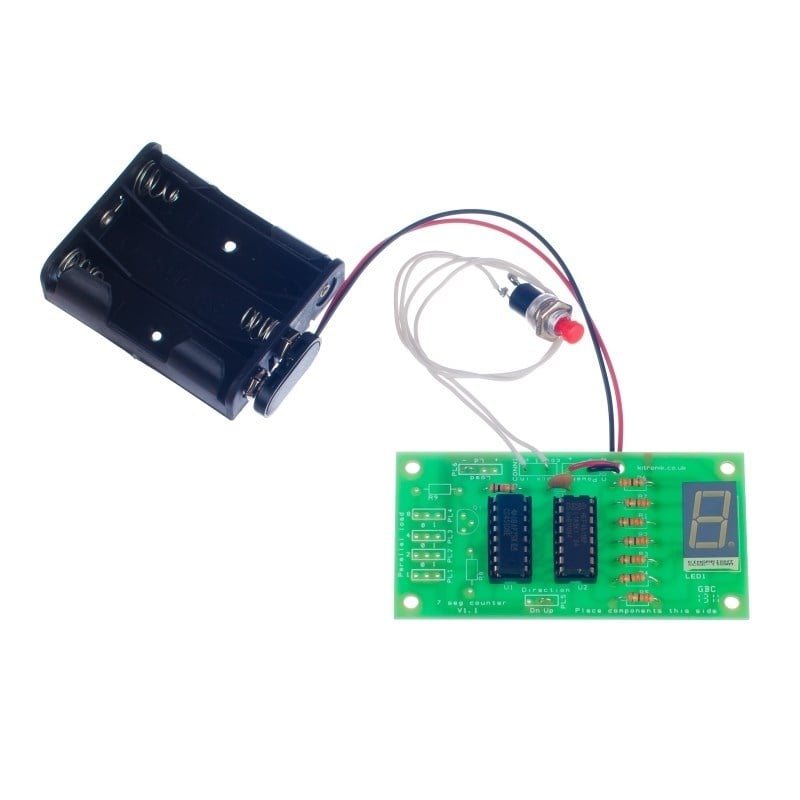
This kit uses a binary up down counter IC and a binary to 7 segment display driver IC to operate the 7 segment LED display. Connections to the board allow up or down counting to take place and pre-set value to be loaded.

The kit makes a nice table football score board as supplied or an electronic dice if used in conjunction with the square wave generator (Application note available).

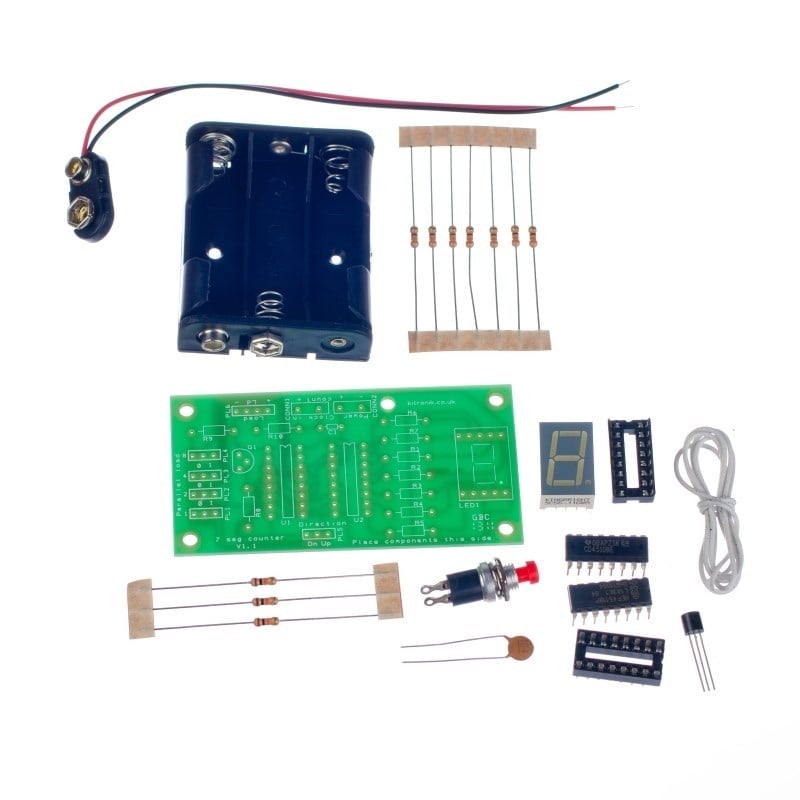
This kit contains:

  • 1 x 4510B BCD up / down counter IC
  • 1 x 4511B BCD to 7 segment driver IC
  • 2 x 16 pin IC holder
  • 7 x 330ohm resistors
  • 3 x 10Kohm resistors
  • 1 x BC337 NPN transistor
  • 1 x 100nF capacitor, ceramic
  • 1 x 7 Seg display module green
  • 1 x push to make switch
  • 1 x PP3 clip lead
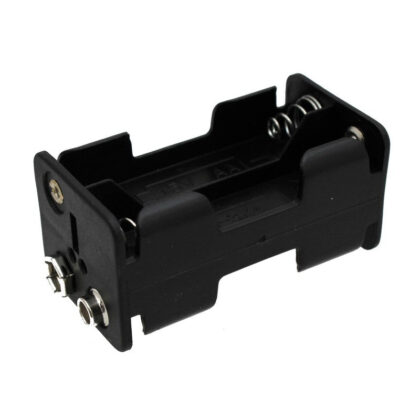
  • 1 x 3AA battery holder
  • 0.5m connecting wire
  • 1 x 7 segment display PCB

PCB dimensions: 85mm x 44.5mm.

Requires x3 AA batteries, available separately.

Click here to download build instructions pdf_icon.gif

Note: Schools will receive a more detailed set of teaching notes on a CDROM.

DescriptionCode 1+ 10+ 100+
7 segment LED display kit2118 £4.28 £3.55 £3.25
*
   

Ask a question about product:

Posted by Brian Zubick on
with this kit is it possible to add 2 more seperate counters with the push buttons?
I am trying to put together a counter like this that I can count 3 sperate items with 3 seperate displays and push buttons.
Posted by Geoff Hampson on
In order to do this you would need to use 3 separate kits.
Posted by M Norris on
regarding the above Kit, is it possible that you have a circuit board that can accommodate two 7 segment displays? I am looking to build a board but only need the numbers to go up to 12, and then back to zero after that, if possible.

Thanks
Posted by geoffhampson on
The up down binary coded decimal IC (4510B) has a pin for carry out (pin 7) and a carry in pin (pin 5). This means that it is possible to use one chip to drive a second chip and it would therefore be possible to get one chip to count to 9 and on roll over trigger the second chip to go from 0 to 1. The only problem is that as this project kit has not been designed to use the carry in pin and as a result it has been set to a state where it is ignored. It is possible to use some logic gates to work out that the number 12 (BCD 10010) has been reached and that a master reset or parallel load of zero is required.

So whilst it would be possible to do it, it won’t be very straight forward and would need tracks cutting plus extra logic gates and mounting of the 7 segment displays on wires in order for them to be together. You may wish to consider using a PICAXE chip or similar.
Posted by Jay on
Hello

Great kit!!! My question is will this kit work for a seven segement display (home made)

Each segment contains 12 led in parallel (each having it's own resistor) the led is about 20ma with forward voltage of 2.2V .......... if i buy your kit can i power my 7 segment display. by simply replacing you display.
Posted by geoffhampson on
The driver IC on this board is a 4511B (BCD to 7 segment driver) and is capable of driving 25mA on each of the 7 segments. If I read your description correctly you are looking to drive 240mA per segment. So would need to connect a transistor between the IC and the LEDs.
Posted by Andrew on
Is it possible to add an extra switch with this kit thats switches down,so you have both.
Aslo is there one with a red display instead of green.
Posted by geoffhampson on
The IC that does the counting has an input to count and an input for direction. If you wanted to have a button for up and a button for down rather than a slide switch for direction and a button to step then you would need some logic. The step input wants to be active if the up or down switch is pressed. In other words feed the up and the down switch (with pull down resistors) in to an OR gate. The up / down pin should be connected to the up button. This now leaves the minor issue of propagation delays and set-up times. At 5V the up / down signal needs to have been present for 300nS before the clock signal arrives. In hardware this means connecting a resistor followed by a capacitor to 0V and then using the point where the resistor and capacitor connect to feed in to the clock in. If you use a 1K and a 1nF it should give you the required delay.
Leave a Reply


(Your email will not be publicly displayed.)

Please type the letters and numbers shown in the image.Captcha Code


Average Rating:

Reviews:

Leave a Review


(Your email will not be publicly displayed.)


Please type the letters and numbers shown in the image.Captcha Code