

Asked by: Dave Kirwin


Quick links
Description
Same Day Dispatch
- Orders placed online before 3:00pm Monday - Friday (excluding public holidays and our Christmas shutdown period) are always dispatched the same day provided the goods are in stock. If the goods are not in stock we will endeavour to contact you as soon as possible to discuss a dispatch date.
UK Deliveries
- If you live on the UK mainland and don't have any large materials or lithium batteries in your order it will cost £3.95 (£4.74 including VAT) if you spend less than £40 (£48 including VAT).
- If you spend between £40 and £200 (£48 - £240.00 including VAT, excluding large materials or lithium batteries) delivery is free to most locations, £12 (£14.40 including VAT, excluding large materials or lithium batteries) to Northern Ireland and £15 (£18.00 including VAT, excluding large materials or lithium batteries) to UK remote locations. For a list of postcodes that will be charged the remote location rate: remote area list.
- If you spend over £200 (£240.00 including VAT, excluding large materials or lithium batteries) delivery is free within the UK.
Rest of the world
- These orders are sent via UPS, and the cost is dependant on the service you choose at checkout. Alternatively you can choose the free collection option and have your own courier collect it from us. International orders can only be shipped to the registered card address. Please note: International orders may be charged import duty dependant on local import laws and duty rates. These charges are usually billed to you directly from UPS.
- Delivery times vary for international orders depending on the service selected and the destination. You can see the delivery time and cost at the shipping stage, or by using the shipping estimator from within the shipping basket.
Collection
- If you would like to collect your order, or use your own courier then there is an option you can select during checkout. We do not charge a packaging or handling fee for this service, and you will receive an email when your order has been processed, you can collect half an hour after receipt of this email.
Further Information
- For information about all of the delivery options we offer see full delivery details.
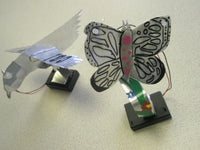
These Colour Changing Mood Lights were made by students at Hawkley Hall High School.
These Colour Changing Mood Lights were made by students at Hawkley Hall High School.
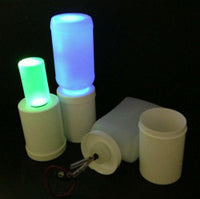
Mood lights using recycled pill pots and hand wash bottles and table centrepiece using colour changing LEDs & Costa straws.
Mood lights using recycled pill pots and hand wash bottles and table centrepiece using colour changing LEDs & Costa straws.
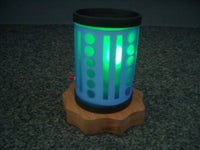
This is an adaptation of our mood light kit which uses a colour changing LED. A simple 555 timer was also added to control the length of time the LED...
This is an adaptation of our mood light kit which uses a colour changing LED. A simple 555 timer was also added to control the...
Q:
Hello, I would like to have three of these operating together - will they work in tandem or would they go out of sync? Thanks, Dave
A:
Hi Dave, the LEDs have microcontrollers in them which determine the timing, due to very slight manufacturing differences the timings are all different and they don't stay in sync. You can try the RGB LEDs we sell, those you have full control over and can get virtually any colour out of. 3551-rgb-5mm-water-clear-led-45deg-1750mcd-common-anode
Answered by: Aaron Sturman
07-Jun-13
Q:
Could I put these LEDs in Series and run them off an unused phone charger. This charger might need a resistor to limit the voltage. Is that a correct assumption and is the whole idea feasible. Thanks in advance Chris
Asked by: chris
A:
You don't need a current limit resistor with these LEDs as long as they are being driven in the right voltage range. The LED is designed to run from 2.7 to 5 V and this can't be done by a current limit resistor as the LED takes different amounts of current depending upon the colour that is being displayed. Most modern phone chargers are 5V and have a mini USB plug on them, older chargers that don't have a USB style plug won?t necessarily be 5V. If you don't have a 5V supply then you would just want to use a 5V regulator to make a 5V supply, these are inexpensive and simple to use, for more info see: 2906-l7805-5v-reg-ic Once you have eit her determined that you have a 5V supply or regulated to 5V you then want to connect the LEDs in parallel, so all the flat edges connect together and to 0V and all the other leads connect together and to 5V.
Answered by: Geoff Hampson
06-Dec-12
Q:
Hi, could i use the coloured LED's for the following? 50v Ac supply if i altered the ressistance of the neutral could i change the colour ie. low ressistance green and high red/ Regards Laurie
Asked by: laurie
A:
The colour changing LED requires a DC voltage of 2.7 to 5V to operate and then cycles through a pre-determined pattern. As it takes a variable amount of current depending on the colour, it is not possible to reduce the voltage across a current limit resistor. So no it can?t be connected as the voltage is both too high and alternating. If you want to be able to control the colour of an LED then you would want to get an RGB LED that contains three separate LEDs see: 3551-rgb-5mm-water-clear-led-45deg-1750mcd-common-anode The max reverse voltage on this part is 5V so don?t use it with an AC supply (even with a current limit resistor).
Answered by: Geoff Hampson
09-Nov-12
Q:
There is no positive/negative polarity on the connecting tails. The garden ornament led voltage with no led connected measures 8vdc from the 1.2v rechargeable battery. Can the led be connected either way?
Asked by: Lionel Buckman
A:
Hi there,
Thank you for your message, there is still a positive and negative leg on these LEDs. The LED should have a slightly flatter edge on one side and this is the negative pole. These LEDs are normally rated to 4.5V so if you are measuring 8V on the circuit you would need a resistor.
Best Regards
Cullen
Thank you for your message, there is still a positive and negative leg on these LEDs. The LED should have a slightly flatter edge on one side and this is the negative pole. These LEDs are normally rated to 4.5V so if you are measuring 8V on the circuit you would need a resistor.
Best Regards
Cullen
Answered by: Cullen Lewis
17-Apr-19
Q:
Can I use one of these connected directly to a CR2032 3v button battery for toys and ornaments?
Asked by: Noel
A:
HI Noel,
Thank you for your email, unfortunately not really. If it did work it would be very dim as normally these LEDs require a 4.5V supply due to the common cathode in the LED.
Best Regards
Cullen
Thank you for your email, unfortunately not really. If it did work it would be very dim as normally these LEDs require a 4.5V supply due to the common cathode in the LED.
Best Regards
Cullen
Answered by: Cullen Lewis
31-Jan-19
Q:
What's the expected lifespan of these LED's?
Asked by: Ayesha
A:
Hi,
Most LEDS have a life span of around ten thousand hours, however there is a number of factors which can alter that. for example, voltage supply..overcurrent protection, enviromental conditions..etc
Most LEDS have a life span of around ten thousand hours, however there is a number of factors which can alter that. for example, voltage supply..overcurrent protection, enviromental conditions..etc
Answered by: Rebecca Diamond
07-Jan-19
Q:
Hi I want to use a single colour changing LED to illuminate a laser cut acrylic image running from a 5v usb lead from a lap top or phone charger, what resistor do I need to use.
Asked by: Alan Thomas
A:
Hi there,
These LEDs include a cathode in them which works similarly to a resistor. Thus with this kit being run from 5V you would not need a resistor for the LED.
Best Regards
Cullen
These LEDs include a cathode in them which works similarly to a resistor. Thus with this kit being run from 5V you would not need a resistor for the LED.
Best Regards
Cullen
Answered by: Cullen Lewis
13-Mar-18
Q:
can I use the colour changing 5mm led under water ,I wont to incorporate them in the outlet pipe on a water feature .thanks Roy
Asked by: Roy Wilkerson
A:
Hi Roy, The plastic housing at the end of the LED should be water tight as it is one complete piece. The issue will come with the exposed legs, as such you would either need to either cover these with some form of water tight insulation, ensuring the legs are kept separate or you place the LED in a water tight unit and push the top part of the LED through a hole which is then sealed this should be fine.
Answered by: Michael Lockhart
28-Feb-18
Q:
Hi - I'm looking to replace a colour changing LED in a salt lamp that is USB driven. I only bought it a week ago & the light has stopped working already....I've taken it apart & it's a 5mm ... I take it these would be a good replacement?
Asked by: Beverley
A:
Hi Beverley, It is a little difficult to say if this would be suitable as it would depend on the specification of the LED supplied in the kit. However this LED does run from a 5V supply so may be suitable.
Answered by: Michael Lockhart
06-Feb-18
Q:
What type of power source am I going to need to power 4 of these lights in one circuit
Asked by: T
A:
Hi, These LEDs are rated to 5V, however you can power them from a 3V coin cell battery, so anything between this range is fine. The LEDs drawn around 20mA, so a combined draw of 80mA for 4 LEDs. Using something like a USB cable, 4101-usb-power-lead. You would then wire the LEDs up in parallel, this way each LED would get 5V.
Answered by: Michael Lockhart
03-Nov-17
Q:
Hi there,
What value resistor do i need to use to power this led off 9v battery?
What value resistor do i need to use to power this led off 9v battery?
Asked by: Cian
A:
Hi Cian, The problem you have is this LED is designed to run off a 5V battery, and using a resistor with this is very difficult due to the fact that the current draw changes. As such if you needed to use a 9V supply for your circuit you would be best to use a 5V regulator to drop the voltage down for the colour changing LED.
Answered by: Michael Lockhart
11-May-17
Q:
How can I get the power supply to colour changing LED from 12V car battery ?
Asked by: Indrasena
A:
Hello Indrasena, The colour changing LED has a maximum voltage supply of 5V’s. As such you shouldn’t’ use a supply that has a higher voltage than 5V’s. We also wouldn’t recommend using a car battery to power a homemade device as a car battery can provide a large amount of current and could be dangerous.
Answered by: Michael Lockhart
28-Sep-16
Q:
Related to the 12v question;
It is possible to put 4 LED's in serial without resistor.
Al
It is possible to put 4 LED's in serial without resistor.
Al
Asked by: Al Baur
A:
You wouldn’t be able to place a number of the colour changing LED’s in series to allow you to use a high rated power supply. This is due to the forward voltage constantly changing while the LED cycles through the different colours, as each colour requires a different forward voltage. As such if you had a number of these in series you could either not have enough forward voltage for each LED, or when they require a smaller forward voltage you could cause the LED’s to become damaged as the supply voltage then becomes more than what is required by the LED’s.
Answered by: Michael Lockhart
19-Feb-16
Q:
I have a UK 3 pin plug usb charger. This states output is 5.3 v dc. Could I use this to power 10 of these in parallel or is the voltage too high?
Asked by: David
A:
The voltage is ok, you should check the maximum current your transformer can supply though. If it is over 300mA you should be fine
Answered by: Aaron Sturman
12-Jan-16
Q:
You stated in an earlier QandA that you can't run these off 12V, but you can if you use a potential divider, a 750 ohm and 470 ohm resister in series and parallel the LED across the 470 ohm resistor.
Asked by: Alex Shaw
A:
Although it is possible to run this off a high voltage using resistors it would cause issues with the LED. This is due to the fact that each colour requires a different current, by having a resistor already in the circuit would mean you are limiting the current twice, and would likely stop the sequence running correctly.
Answered by: Michael Lockhart
06-Jan-16
Q:
What would I need to do to run these from a 12v supply in a car? I'm guess a circuit of resistors?
Asked by: Terry
A:
You wouldn’t be able to run these LED’s at a higher voltage of 5V’s and use resistors to bring the current down. This is due to the fact that each colour requires a different current and as such you wouldn’t be able to limit it without limiting the way the LED works.
Answered by: Michael Lockhart
26-Oct-15
Q:
hi i want to put these in a parallel box mod for vaping, it will be X2 18650 batteries in parrallel so the volts wont go above 4.2v but the watts can sometimes go over 100 will i need a resistor for this usage.
Asked by: stephen husband
A:
The LED’s are fine working at 4.2V, it has a built in current limiting for any voltages up to 5V. You will be fine to put the LEDs in parallel with the batteries and you won’t have any problem. The wattage of the heater want make a difference, as the LED’s will only draw about 25mA each when wired in parallel with the batteries.
Answered by: Michael Lockhart
07-May-15
Q:
is it best to wire in series or parallel please. I am using 30 or 40 in a string
Asked by: Barry
A:
You wouldn’t be able to wire this circuit in series as you would need a supply voltage of 200v DC to give each LED 5V. The best option is to wire the circuit in parallel. Please be aware that each LED can only be run at a maximum of 5V.
Answered by: Michael Lockhart
16-Apr-15
Q:
I ran 4 of these in parallel from a 5v adapter and they burned out after a couple of hours. Should I use a limiting resistor and what value? thank you in advance, Barry
Asked by: barry
A:
Hi Barry, The LED’s shouldn’t be burning out as they don’t need a current resistor and they can handle a power supply of up to 5V. To understand why this might be happening I need some more information, such as the rating on the power supply and ideally a photo of the circuit. If you can supply this to me in an email to support@kitronik.co.uk then we can try and solve the problem.
Answered by: Michael Lockhart
12-Feb-15
Q:
Is the colour sequence something like red,green,blue,yellow cyan magenta, white and then back to red again? Also, is each colour in the sequence displayed for the same period of time or does it vary. I presume the colour change is a gentle fade from one colour to the next.
Asked by: Nigel
A:
The sequence is as followed: Red, green, blue, yellow, cyan, magenta then back to the beginning of the cycle. As the change is a gentle fade you do get colours between these in the cycle, such as the fade between red and green will produce an orange/yellow glow for a short period before fully changing to green. The time between each change varies depending on what the next colour in the sequence is, so the amount of time the colour stays on for does vary slightly although there isn’t a large difference in time variations.
Answered by: Michael Lockhart
29-Jan-15
Q:
If I wire several of these in parallel on a 5v supply, will they all be showing the same colour simultaneously, or will their colour changing each be at a different phase, or do they change colour randomly?
Asked by: John Smith
A:
Hi, they all go out of phase after a few cycles. It's the same sequence for each LED but the timings on each LED are very slightly different.
Answered by: Aaron Sturman
05-Nov-14
Q:
Hi
I am trying to use this LED to light an ornament along with your coin cell power board package 2145, but I don't know how long it will drive the LED - these batteries have a low capacity I understand? Any suggestions on getting more than a few hours without a huge battery pack?
I am trying to use this LED to light an ornament along with your coin cell power board package 2145, but I don't know how long it will drive the LED - these batteries have a low capacity I understand? Any suggestions on getting more than a few hours without a huge battery pack?
Asked by: shannon
A:
The capacity of the CR2032 coin cell is 200mAh. Technically these batteries are designed for keeping clocks on time when the power fails and as such state that the max current draw is 10mA. If you take more than this it won't be a problem however the internal resistance of the battery will mean that it will limit the current and the voltage may drop a little. This can be seen when the cell is running low, by the LED dimming and then voltage dropping to the point where the cycle starts again. The current taken by the colour changing LED will depend upon the colour that it is showing, lets use a typical average value of 40mA. In which case the cell will last about 5 hours (40mA per hour for 5 hours = 200mA capacity).
Your simplest option for a longer life would be 3x AA batteries. A good AA battery will have a capacity of around 1500mAh so would last for around 38 hours with a colour changing LED. Mobile phones use lithium ion batteries which would be good choice on size, but whilst these are compact circuits for charging them are very complex.
Your simplest option for a longer life would be 3x AA batteries. A good AA battery will have a capacity of around 1500mAh so would last for around 38 hours with a colour changing LED. Mobile phones use lithium ion batteries which would be good choice on size, but whilst these are compact circuits for charging them are very complex.
Answered by: Geoff Hampson
06-Oct-14
Q:
Hi there I'm looking for a led changing component that works and is safe in lit candles. Do you stock this? I live in the uk. Thanks
Asked by: melanie
A:
It depends on what you mean by "safe in lit candles". We don't stock any LEDs that won't melt or stop working at very high temperatures, but if it would be for example in a candlestick under the flame it would function fine. The key thing is keeping any batteries away from heat or flames, they can leak or even explode.
Answered by: Aaron Sturman
29-Aug-14
Q:
Just wired 20 of these in parallel using a 5volt dc supply with a 470 uf cap at the end. All working brilliantly. But I've a niggling question. After checking other colour changing leds, the max voltage is 3.4. Is these leds ok at 5 volt?
Asked by: Phill
A:
Hi, these particular ones are ok up to 5V. They have a typical forward voltage of 4.5V so they are a little different to the 3.4V ones you saw elsewhere.
Answered by: Aaron Sturman
04-Aug-14
Q:
Hi, I am trying to repair a couple of the solar powered lights from the garden (colour changing LED leads have rotten away) The light has a 1.2 volt NI CAD battery. I measured the voltage to the LED on a working light and measured 2.2 volts DC. This is under your specification but do you think it will work OK? Or can you suggest a alternative please?
Asked by: Nick
A:
Hi, 2.2V won't power a colour changing LED. It may light up very dimly or not at all. If it is a 1.2V battery though it suggests the voltage is being boosted some way. Your multimeter would read the average voltage and not the peak voltage. The peak may be enough to light the LED.
Without knowing more about the lamp it's impossible to say.
Without knowing more about the lamp it's impossible to say.
Answered by: Aaron Sturman
30-Jun-14
Q:
Hi are these the LEDS that you use in your usb powered lamp kits?
Thanks Tim
Thanks Tim
Asked by: Tim
A:
Yes, they are.
Answered by: Aaron Sturman
27-May-14
Q:
if i intended to have several 5mm colour changing LED's (High Brightness) in a parallel circuit how many could i run off a; USB 5V UK mains wall power supply or 12V 500mA UK mains wall power supply
Asked by: Emma
A:
20 from USB, 60 from the 12V .5A power supply. Those are theoretical maximums though. You might want to go a little lower.
Answered by: Aaron Sturman
04-May-14
Q:
Hello, I would like to have three of these operating together - will they work in tandem or would they go out of sync? Thanks, Dave
Asked by: Dave Kirwin
A:
Hi Dave, the LEDs have microcontrollers in them which determine the timing, due to very slight manufacturing differences the timings are all different and they don't stay in sync. You can try the RGB LEDs we sell, those you have full control over and can get virtually any colour out of. 3551-rgb-5mm-water-clear-led-45deg-1750mcd-common-anode
Answered by: Aaron Sturman
11-Apr-14
Q:
If I intend to wire together let's say 300 of these and use batteries for a power source, will that work (if i understand properly I believe 3xAA should run 300 lights for 16 minutes)? What maximum length of wiring can I realistically expect to have, between each light, and length in total and still have my lights work?
Asked by: Cole
A:
Hi, that's almost right. What you've overlooked there is to power 300 LEDs in parallel at 25mA each the batteries would have to provide 7.5A. AA batteries can't supply that much current. In fact a lot of wall power supplies can't either. Take a look at this http://led.linear1.org/led.wiz . One thing that works is using a 12V power supply and chains of 3 LEDs in parallel. You can get that down to about 3.5A which can be supplied by our wall mount PSU http://www.kitronik.co.uk/products/batteries-holders-chargers-usb-power/power-supplies-and-usb-power/wall-mount-psu-12v-5a/.
Answered by: Aaron Sturman
29-Oct-13
Q:
hi i want to put these in my bathroom ceiling is that ok and what can i run them off as i dont understand voltage very well thanks tom
Asked by: thomas
A:
3xAA batteries will run a single colour changing LED for about 80 hours. If it's in a bathroom you probably want to avoid using mains transformers as they are not waterproof.
Answered by: Aaron Sturman
09-Oct-13
Q:
The color changing LEDs I have in my radio make a strange noise through the speaker when they change color. They are the seven color changing LEDs. Every one of them I try does the same thing. What is the reason for this and is there a way I can make it stop?
Asked by: George Garcia
A:
Hi George, Can I ask how you connected the LEDs? Where in the circuit are they? The amount of current the LEDs draw varies as they change colour and this is likely causing the power supply to fluctuate which in turn is upsetting the IC as it tries to decode the radio signals. Are you powering the circuit from a battery or the mains? Is it one of our FM radio kits?
Answered by: Aaron Sturman
10-May-13
Q:
Hi Was just wondering, if I were to connect 4 or 5 of these in parallel powered via USB should there be any issues with that? Thanks.
Asked by: James
A:
The only thing to watch out for is in a worst case scenario the LED takes more current for certain colours, if they were all in sync which they could be briefly at the start then you should use a max working current of 50mA per LED. So worst case 5 LEDs would be 250mA. Now the USB port allows devices to take 100mA as standard, however the device can talk to the computer and ask for up to 500mA. The computer then make a decision based on what else is connected as to whether a higher current is allowed. Clearly the colour changing LEDs can?t ask for more current so you will need to decide if it?s going to be OK before plugging it in. If nothing else is connected to the computer then it will be fine.
Answered by: Geoff Hampson
19-Nov-12
Q:
Is the only difference between the Five and the Ten mm sized colour changing LEDs the size because the data you have stated appears to be the same? Thanks in anticipation Always with sincerity, H.David C.Stodell
Asked by: hymiedavid
A:
It's exactly the same LED in the centre of the package in both cases, it is just a case that one is 5mm in diameter and the other is 10mm in diameter. They both cycle the same pattern at the same brightness, some people find the larger LED is better for what they are doing and others will go for the smaller one.
Answered by: Geoff Hampson
07-Nov-12
Q:
Is the only difference between the Five and the Ten mm sized colour changing LEDs the size because the data you have stated appears to be the same? Thanks in anticipation Always with sincerity, H.David C.Stodell
Asked by: hymiedavid
A:
It's exactly the same LED in the centre of the package in both cases, it is just a case that one is 5mm in diameter and the other is 10mm in diameter. They both cycle the same pattern at the same brightness, some people find the larger LED is better for what they are doing and others will go for the smaller one.
Answered by: Geoff Hampson
11-Jul-12
Q:
If I put let say 30 led in series I need to know: - how much power do I need? - all leds will go trough all colors at same time? Thank you Gabi
Asked by: gabi
A:
The LEDs typically take about 25mA, however some colours require more current than others, it could peak at 50mA so it's best to use that for max current calculations. So with 30 LEDs you should allow for 1.5A current (this is at 5V). You can reduce the brightness and therefore current by bringing the voltage down, running at 4.5V would use less power than at 5V. Each LED has a small computer in it and runs off a clock driven by a resistor capacitor network. As a result the timing of one LED will be different to another LED. We have a sign that we use at shows that has 36 colour changing LEDs in it. To get them in sync I had to take a bigger batch of LEDs and power them up and take out the ones that were too fast or too slow. Doing this you can keep the LEDs within a second or two of each other for t
he complete cycle. The sequence starts and finishes on red and if you turn all the LEDs off for a fraction of a second at the end of the sequence the computer in them will reset and the timings will be resynchronised. The human eye won't see the LEDs go off. If you don't resynchronise the LEDs they will all be on different colours after about 10 minutes.
Answered by: Geoff Hampson
25-Jun-12
Q:
Could I put these LEDs in Series and run them off an unused phone charger. This charger might need a resistor to limit the voltage. Is that a correct assumption and is the whole idea feasible. Thanks in advance Chris
Asked by: chris
A:
You don't need a current limit resistor with these LEDs as long as they are being driven in the right voltage range. The LED is designed to run from 2.7 to 5 V and this can't be done by a current limit resistor as the LED takes different amounts of current depending upon the colour that is being displayed. Most modern phone chargers are 5V and have a mini USB plug on them, older chargers that don't have a USB style plug won't necessarily be 5V. If you don't have a 5V supply then you would just want to use a 5V regulator to make a 5V supply, these are inexpensive and simple to use, for more info see 2906-l7805-5v-reg-ic.
Once you have either determined that you have a 5V supply or regulated to 5V you then want to connect the LEDs in parallel, so all the flat edges connect together and to 0V and all the other leads connect together and to 5V.
Once you have either determined that you have a 5V supply or regulated to 5V you then want to connect the LEDs in parallel, so all the flat edges connect together and to 0V and all the other leads connect together and to 5V.
Answered by: Geoff Hampson
12-Jun-12
Q:
if this led was connected to 2 AA batteries in one of your switched battery holders how long would this unit flash for.
Asked by: tony crook
A:
If you use two AA batteries then when they are brand new there will be 3.2V across them both. This quickly drops to 3V hence the 1.5V per cell value. The problem is that for the rest of the batteries life the voltage slowly drops from 1.5V down to 1V. So if you want to get the most out of the two batteries then you will only have 2V across both of them at the end of their life. Since the colour changing LED is only rated down to 2.7V you will only be using 30% of the batteries capacity. With this in mind I?m going to do the sums for 3x AA batteries as 100% off the batteries capacity will be used. A good alkaline battery has a capacity of 1500mA/h, which means that if you draw 1500mA out of the battery it will last 1 hour. The current taken by the colour changing LED will vary depending on colour and battery voltage, b
ut let's assume a current of 25mA. So the battery capacity is 1500mA/h divided by the current (25mA) so it will last for 60 hours. A cheaper zinc carbon battery will probably be half this amount. This is based on using 3 AA batteries. If only 2 AA batteries are used then they will last for less than 20 hours with alkaline batteries and less than 10 with zinc carbon batteries.
Answered by: Geoff Hampson
28-Nov-11
Q:
hello how does this colour changing LED work , does it change colour randomly or does it change colour based on the input voltage i.e 2.7 to 5v ? If its changes based on the input voltage how bright is it ? Do you have a 10mm version ?
Asked by: jim
A:
Inside the colour changing LED is a microcontroller and a red, green and blue LED. What the microcontroller does is turn the three LEDs on and off very quickly and depending on if a colour is on for longer than it is off will determine the brightness of that colour. This means that the amount of the red, green and blue can be varied and a whole range of colours are available. Thus the LED is able to slowly cycle through the various colours. The voltage does have an effect on the brightness but not really the speed. A video of the product in action is available on the link at the bottom of the description. We have recently added a 10mm version which is now shown in the related items section on the left.
Answered by: Geoff Hampson
21-Apr-11
Ask a question about this product
Payment & Security
Your payment information is processed securely. We do not store credit card details nor have access to your credit card information.